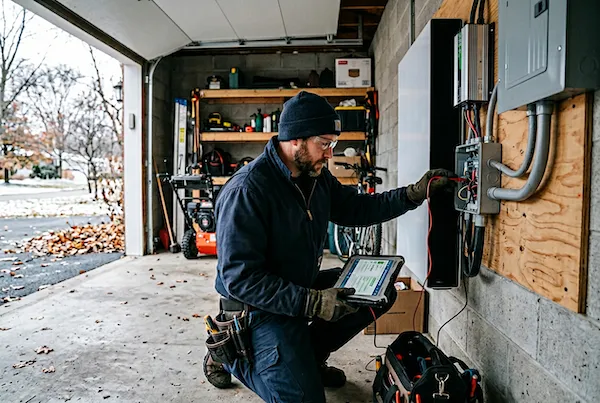
Pre-Winter Solar and Battery Health Check: Essential Glasgow Homeowner Checklist
Winter in Glasgow brings shorter days, heavy rain, and occasional storms—conditions that put extra strain on your solar panel system and battery storage. A comprehensive pre-winter health check ensures your system performs reliably when you need it most, avoiding costly mid-winter breakdowns and maximizing generation during the challenging winter months.
In this guide, we’ll walk you through the essential pre-winter solar and battery health check for Glasgow homeowners—covering panels, inverters, batteries, electrical connections, and energy optimization strategies.
Why Pre-Winter Checks Are Critical
1. Winter Performance Matters
70–80% of annual consumption occurs in winter (heating, lighting)
Lower solar generation (50–170 kWh/month vs 400–500 in summer)
Every kWh counts when you need energy most
2. Storm Damage Prevention
Glasgow averages 150+ days/year of rainfall
Autumn/winter storms can loosen mountings, damage wiring
Early detection prevents expensive emergency repairs
3. Battery Performance in Cold
Batteries perform best at 15–25°C
Winter temps (5–10°C) reduce efficiency by 5–10%
Pre-winter optimization ensures maximum battery performance
4. Warranty Protection
Most warranties require reasonable maintenance
Annual health checks demonstrate due diligence
Documented maintenance strengthens warranty claims
Your Pre-Winter Solar & Battery Checklist
✅ Task 1: Visual Panel Inspection
What to check (from ground level):
No visible cracks or damage to panel glass
No discoloration (yellowing, brown spots indicate degradation)
Mounting frames secure (no visible gaps or movement)
No debris buildup (leaves, moss, bird nests)
Red flags: Cracked glass, loose panels, heavy moss/lichen growth
Action: If you spot issues, contact Solar Installers Glasgow for professional inspection.
✅ Task 2: Professional Panel Cleaning
Why it matters: Autumn debris (moss, lichen, bird droppings) reduces winter generation by 10–15%.
When: October–early November (before winter rain locks in dirt)
Options:
DIY (if safe roof access): Soft brush, non-abrasive cleaner, hose
Professional (recommended): £80–£150; includes inspection, safety equipment, insurance
Pro tip: Clean panels before winter to maximize limited winter sunlight.
✅ Task 3: Inverter Diagnostic Check
What to check:
✅ No error codes on inverter display or app
✅ Generation matches expectations (compare to last year or forecast)
✅ Fan operates smoothly (if applicable)
✅ Firmware is updated (check manufacturer app/website)
✅ No unusual noises (buzzing, clicking indicates faults)
Action if issues detected:
Error codes: Note exact code, contact installer
Low generation: Check for shading, dirty panels, or equipment fault
Strange noises: Immediate professional inspection required
✅ Task 4: Battery Health Diagnostics
Check battery app for:
✅ State of Health (SoH): Should be >90% if <3 years old, >80% if <5 years
✅ No warning messages (cell imbalance, temperature alerts)
✅ Charge/discharge cycles within normal range
✅ Temperature: Battery should be in 0–35°C environment
Optimization for winter:
Enable grid charging (if on time-of-use tariff): Charge battery overnight at 7–10p/kWh, use during peak (20–30p/kWh)
Adjust discharge settings: Prioritize evening use (5–11 PM) when consumption is highest
Check insulation: If battery is in unheated garage, consider insulation (consult installer)
✅ Task 5: Electrical Connections Inspection
Why it matters: Summer heat causes expansion; autumn cooling can loosen connections.
What to check (or have installer check):
✅ DC cables (panels to inverter) are secure, no fraying
✅ AC cables (inverter to consumer unit) are tight
✅ No exposed wiring or damage from wildlife
✅ Junction boxes are sealed, weatherproof
✅ Earth bonding is intact
Safety note: Electrical work requires expertise—schedule professional inspection if your system is >3 years old.
✅ Task 6: Roof & Mounting System Check
What to look for:
✅ Mounting brackets secure (no visible movement)
✅ Roof tiles/slates around panels are intact
✅ Flashings and seals are weatherproof
✅ Drainage channels clear (prevents water pooling)
✅ No signs of water ingress around mounting points
When to call professional: Any visible damage, loose fixings, or signs of water ingress.
✅ Task 7: Smart Meter & Monitoring Setup
Verify monitoring is working:
✅ Smart meter displays generation data
✅ Inverter app shows real-time production
✅ Export tracking is accurate (for SEG payments)
Set up winter alerts:
Low generation alerts (notifies you of underperformance)
Inverter fault alerts (immediate notification of errors)
Battery low/high temp warnings
✅ Task 8: Energy Consumption Optimization
Prepare for winter energy management:
Shift consumption to solar hours (10 AM–2 PM):
Run dishwasher, washing machine, dryer during midday
Set timers/smart plugs for automated scheduling
Maximize battery efficiency:
Enable overnight grid charging (off-peak rates)
Discharge battery during evening peak hours
Preheat your home:
If you have electric heating, boost temp 11 AM–2 PM using free solar
Stored heat reduces evening grid usage
Review tariff:
Consider switching to time-of-use tariff (Octopus Agile, EDF GoElectric) to maximize battery value
Professional Pre-Winter Service: What’s Included
Solar Installers Glasgow offers comprehensive pre-winter health checks (£120–£180):
Inspection includes:
Professional panel cleaning
Electrical connections tightening
Inverter firmware update & diagnostics
Battery health report (if applicable)
Roof mounting inspection
Performance report with winter forecast
Recommendations for optimization
When to book:
October–early November (before winter weather arrives)
Common Pre-Winter Issues & Solutions
IssueCauseSolutionGeneration drop 15%+Dirty panels, shading, inverter faultClean panels, trim trees, inverter diagnosticBattery not charging fullyCold temps, settings, cell degradationEnable grid charging, check temperature, battery health testInverter error codesFirmware outdated, component faultUpdate firmware, professional inspectionWater pooling on panelsBlocked drainageClear debris from panel edges, check mounting angleLoose mounting bracketsThermal expansion/contractionProfessional re-tightening, check weatherproofing
Winter Monitoring Best Practices
Daily checks (via app):
Generation matches forecast (pvoutput.org, inverter app)
No error messages
Battery charging/discharging normally
Weekly checks:
Total weekly generation vs previous years
Export vs self-consumption ratio (aim for 70–80% self-use with battery)
Monthly checks:
Compare monthly total to last year
Calculate savings (kWh × 20p/kWh grid rate)
Review SEG payments
Frequently Asked Questions
1. How often should I do a full solar & battery health check?
Twice per year is recommended: Pre-winter (October–November) and post-winter (March–April). These checks catch seasonal issues early and ensure peak performance during high-demand periods. Systems >5 years old benefit from annual professional servicing.
2. Can I clean my own solar panels in winter?
Not recommended in winter due to safety risks (icy roofs, short daylight, wet conditions). Schedule cleaning in October–early November (before winter) or wait until spring (March–April). If urgent winter cleaning is needed, hire a professional with appropriate safety equipment.
3. Will my battery still work if it’s in an unheated garage?
Yes, but with 5–10% reduced efficiency when temps drop to 5–10°C. Most modern batteries (Tesla Powerwall, Hanchu ESS, GivEnergy) are rated for 0–35°C operation. If your garage drops below 0°C regularly, consult your installer about insulation or relocation. Never use electric heaters near batteries (fire risk).
4. What should I do if I find a problem during my pre-winter check?
Immediately contact Solar Installers Glasgow if you find:
Error codes on inverter
Cracked or damaged panels
Loose mounting brackets
Water ingress around fixings
Battery warning messages
Most issues are covered under warranty if caught early. Delaying repairs can void warranties and cause more extensive (expensive) damage.
Book Your Pre-Winter Health Check Today
Don’t let winter catch you unprepared. Solar Installers Glasgow offers expert pre-winter servicing to ensure your system performs reliably when you need it most.
👉 Book Your Pre-Winter Health Check and enjoy peace of mind this winter.
We’re MCS-certified, HIES-protected, and trusted by hundreds of Glasgow homeowners. All inspections come with detailed performance reports and optimization recommendations.
📞 Call us today or visit solarinstallersglasgow.com.
Related: Solar Panel Maintenance in Glasgow: How to Keep Your System Performing for 30+ Years
