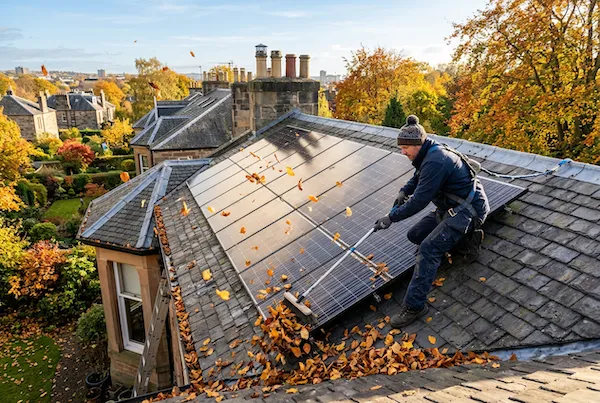
Autumn Solar System Prep: How Glasgow Homeowners Can Prepare for Winter Energy Demands
As autumn arrives in Glasgow, your solar panels transition from peak summer production to the lower-output winter months. But with proper autumn solar system preparation, you can maximize generation, extend equipment life, and ensure your system performs efficiently during Scotland’s demanding winter energy season.
In this guide, we’ll walk Glasgow homeowners through essential autumn solar prep tasks—from cleaning and inspections to energy optimization strategies—to prepare your system for winter.
Why Autumn Solar Prep Matters
1. Summer Debris Accumulation
Moss, lichen, pollen, bird droppings accumulate over summer
10–15% generation loss from dirty panels is common
Autumn cleaning restores full efficiency before winter’s lower sun angle
2. Winter Energy Demands
Heating, lighting, cooking consumption rises 30–50% in winter
Shorter days mean less solar generation (Dec–Feb: 50–170 kWh/month vs 400–500 kWh in summer)
Every kWh counts: ensuring peak system performance is crucial
3. Prevent Winter Issues
Blocked drainage can cause water pooling and ice damage
Loose connections from summer thermal expansion can fail in winter cold
Early detection prevents costly mid-winter repairs
4. Battery Optimization
Cold temperatures affect battery performance
Autumn checks ensure battery health before winter’s heavy cycling
Your Autumn Solar System Checklist
Task 1: Professional Panel Cleaning (September–October)
Why it matters: Dirty panels lose 10–15% efficiency. Autumn cleaning maximizes winter generation.
What’s involved:
Remove moss, lichen, bird droppings, pollen
Clean frames and drainage channels
Inspect for micro-cracks or damage
DIY vs Professional:
DIY (if safe roof access): Use soft brush, non-abrasive cleaner, hose
Professional (recommended): £80–£150; includes safety equipment, insurance, inspection
When: September–early October (before leaf fall peaks)
Task 2: Leaf and Debris Removal (Ongoing Oct–Nov)
Why it matters: Autumn leaves can block panels, drainage, and cause shading.
What to do:
Weekly checks during peak leaf fall (late October–November)
Remove leaves from panel edges, gutters, and mounting frames
Check for overhanging branches that may need trimming
Safety note: Only clear leaves if you have safe roof access. Otherwise, hire a professional.
Task 3: Inverter Health Check
Why it matters: Inverters work hardest in summer and can develop faults before winter.
What to check:
✅ No error codes on inverter display or app
✅ Fan operation (if applicable) is quiet and smooth
✅ Firmware updated (check manufacturer website or app)
✅ Daily generation matches seasonal expectations (compare to previous year or forecasts)
Action if issues detected: Contact Solar Installers Glasgow for diagnostic visit (covered under warranty if <5 years old).
Task 4: Electrical Connection Inspection
Why it matters: Summer heat causes thermal expansion; autumn cooling can loosen connections.
What to check (or ask your installer to check):
✅ DC cable connections (panel to inverter) are tight
✅ AC connections (inverter to consumer unit) are secure
✅ No exposed wiring or damage from wildlife
Professional inspection recommended: Electrical safety requires expertise—schedule an autumn service visit if your system is >3 years old.
Task 5: Battery Storage Health Check (If Applicable)
Why it matters: Batteries perform best at 15–25°C. Cold winter temps (5–10°C) reduce efficiency by 5–10%.
What to check:
✅ Battery app shows no warnings (degradation, cell imbalance)
✅ Charge/discharge cycles are within normal range
✅ Temperature management: If battery is in an unheated garage, consider insulation (consult installer first)
Optimization tip: If you have a time-of-use tariff (e.g., Octopus Agile, EDF GoElectric), increase winter charging from off-peak grid (7–10p/kWh) to supplement lower solar generation.
Task 6: Roof and Mounting System Inspection
Why it matters: Storm damage from autumn/winter weather can compromise mounting integrity.
What to check:
✅ No loose mounting brackets or fixings
✅ Roof tiles/slates around panels are intact
✅ Flashings and seals are weatherproof
✅ No signs of water ingress around mounting points
When to call a professional: If you see any damage, contact your installer immediately. Most workmanship warranties cover mounting system issues.
Task 7: Optimize Energy Consumption for Winter
Why it matters: Lower winter generation means maximizing self-consumption is critical.
Strategies:
Shift usage to solar hours (10 AM–2 PM):
Run dishwasher, washing machine, dryer during midday
Use smart plugs/timers to automate
Charge battery from grid overnight (if on time-of-use tariff):
Set battery to charge at 7–10p/kWh off-peak
Use stored energy during peak hours (20–30p/kWh)
Preheat home during solar generation:
If you have electric heating, boost temperature 11 AM–2 PM using free solar
Monitor daily generation:
Use inverter app to track output
Compare to last year or online forecasts (pvoutput.org)
Report underperformance to installer
Month-by-Month Autumn Prep Timeline
MonthTasksSeptemberProfessional panel cleaning, inverter health check, firmware updateOctoberWeekly leaf removal, battery health check, consumption optimization setupNovemberFinal debris clear, electrical inspection, pre-winter service (if >3 years old)
Common Autumn Issues (And How to Fix Them)
Issue 1: Sudden Generation Drop
Cause: Dirty panels, shading from tree growth, or inverter fault
Fix: Clean panels, trim overhanging branches, check inverter for errors
Issue 2: Battery Not Charging Fully
Cause: Lower autumn generation, settings need adjustment
Fix: Enable grid charging during off-peak hours (7–10p/kWh)
Issue 3: Water Pooling on Panels
Cause: Blocked drainage channels
Fix: Clear debris from panel edges and mounting frames
When to Call a Professional
Schedule a professional autumn service if:
Your system is >3 years old (annual maintenance recommended)
You notice generation drop >20% vs last year
Inverter error codes appear
You have no safe roof access for cleaning/inspection
You want peace of mind before winter
Solar Installers Glasgow offers autumn solar health checks (£120–£180) including:
Professional panel cleaning
Electrical and inverter inspection
Battery health diagnostics (if applicable)
Performance report and optimization recommendations
Frequently Asked Questions
1. How often should I clean my solar panels in Glasgow?
Twice per year is ideal: September/October (pre-winter clean) and March/April (post-winter clean). Glasgow’s frequent rain naturally cleans panels, but autumn’s moss, lichen, and leaf debris require manual removal to prevent winter buildup.
2. Can I clean my solar panels myself?
Yes, if you have safe roof access and appropriate safety equipment. Use a soft brush, non-abrasive cleaner (or just water), and a hose. Never use pressure washers (can damage panel coatings) or abrasive tools. If you’re uncomfortable with heights or ladder work, hire a professional (£80–£150).
3. Will my solar panels generate enough in winter to make autumn prep worth it?
Yes. While winter generation is 15–20% of annual output, every kWh matters because:
Grid electricity is expensive (20–30p/kWh)
Winter consumption is highest (heating, lighting)
A clean, well-maintained system generates 10–15% more than a neglected one
Over 30 years, this adds up to thousands of pounds in extra savings.
4. Do I need to winterize my battery storage?
Most modern batteries (Tesla Powerwall, Hanchu ESS, GivEnergy) are rated for 0–35°C operation and don’t require winterization. However, if your battery is in an unheated garage where temps drop below 0°C, consult your installer about insulation options. Cold temps (5–10°C) reduce efficiency by 5–10%, but this is normal and safe.
Get Your Autumn Solar Health Check
Ready to prepare your system for winter? Solar Installers Glasgow offers a comprehensive autumn service including cleaning, inspection, and optimization—ensuring your system performs at its best during Glasgow’s winter months.
👉 Book Your Autumn Service and maximize your winter solar savings.
We’re MCS-certified, HIES-protected, and trusted by hundreds of Glasgow homeowners. Finance options available.
📞 Call us today or visit solarinstallersglasgow.com.
Related: Solar Panel Maintenance in Glasgow: How to Keep Your System Performing for 30+ Years
